.png)
IBM Event Endpoint Management: Enhancing data quality with broker-side validation
As integration developers, we know the importance of data quality. Only one event which is non-compliant with the schema can have a huge impact. Even more so in an event-driven integration where one ‘rogue event’ can impact all subscribed consumers, break applications and eventually damage the trust-factor of your core event structure.
To avoid this, we use schemas and schema enforcements through the schema registry. A schema registry (which is a stand alone server with the sole purpose of storing schemas for Kafka topics)enables centralized schema management, compatibility enforcement, governance and self-service.
So far, my experiences on projects have been with client-side validation. Which provides actionable error feedback, making it easier for the development team to debug and fix issues with invalid data. It also facilitates the fail-fast concept where the producing application catches the error before sending it to the Kafka topic. However, I’ve also experienced that the consuming application is very dependent on the quality of data (and validation) the producer implements. If the producer does not take schema validation seriously, it can still break the consuming application.
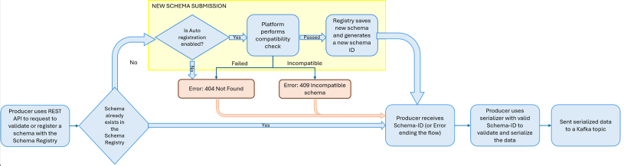
How does client-side validation work?
Simply taken, these are the steps required for client-side validation and publication of events.
Possible pitfalls
The primary risk of client-side validationis that it remains optional. The Kafka topic does not enforce any type ofschema validation. So, if the producing application does not do any validation,it will still be able to produce events to the topic.
But let’s assume that the developers of theproducing application implemented schema validation. Several risks remain:
- Version mismatch: A new versionof the schema has been provided but the producer or consumer have not synced tothe newer version causing issues during serializing and/or deserializing theevents on the topic.
- Not using a Schema Registry SerDe: a producer can opt to use a StringSerializer ora ByteArraySerializer. This will result in plain text or raw bytes being pushedto Kafka without the schema ID. Causing any consumerusing the schema registry for validation to be unable to process the eventusing a schema to deserialize.
- Relaxed SerDe configurations: Client-sidelibraries can be reconfigured to loosen or even bypass client-side validation.
Event Endpoint Management: broker-side validation to savethe day
The easiest way to guarantee the dataintegrity of your events on your Kafka topics is by shifting the validationprocess from an untrusted client to a trusted broker. This capability is preciselywhat IBM Event Endpoint Management(EEM) provides in the form of controls toyour topic subscribers.
Insteadof providing direct access to your Kafka topics (on Confluent or any otherKafka platform). We will route all traffic through an event gateway. Thisgateway will manage traffic and is able to enforce restrictions/rule-sets onall producers and consumers in the form of policies (options). More info onoptions can be found here: : https://ibm.github.io/event-automation/eem/describe/managing-options/.
There are several types of control actionsthat can be assigned to an option:
- Approval
- Mutual TLS
- Schema enforcement
- …
This specific control enforces the producercan only produce events matching the schema. If the producer wants to send anevent which is not compatible with the schema, it will be rejected.
Demo
Prepare the demo environment
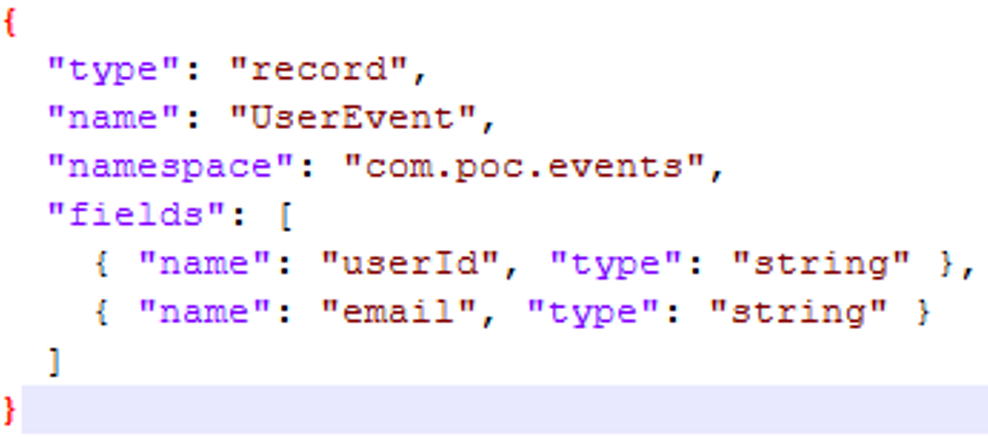
I’m using a simple Avro schema to validatethe events I’ll be sending:
I’m running a simple setup of Confluent onmy laptop. To simplify the setup, I’ve created three topics:
- poc.unprotected.eventing
- poc.unprotected.schema.eventing(providing a schema in the schema registry)
- poc.protected.eventing(protected by IBM Event Endpoint Management)
I’m using python scripts to createdifferent producers supporting my cases. I’ll share parts of the code to showwhat I’m doing. Important: The code shown is quickly made without anyintention of promoting it to any other environment than this demo. So, it isnot production ready by any means.
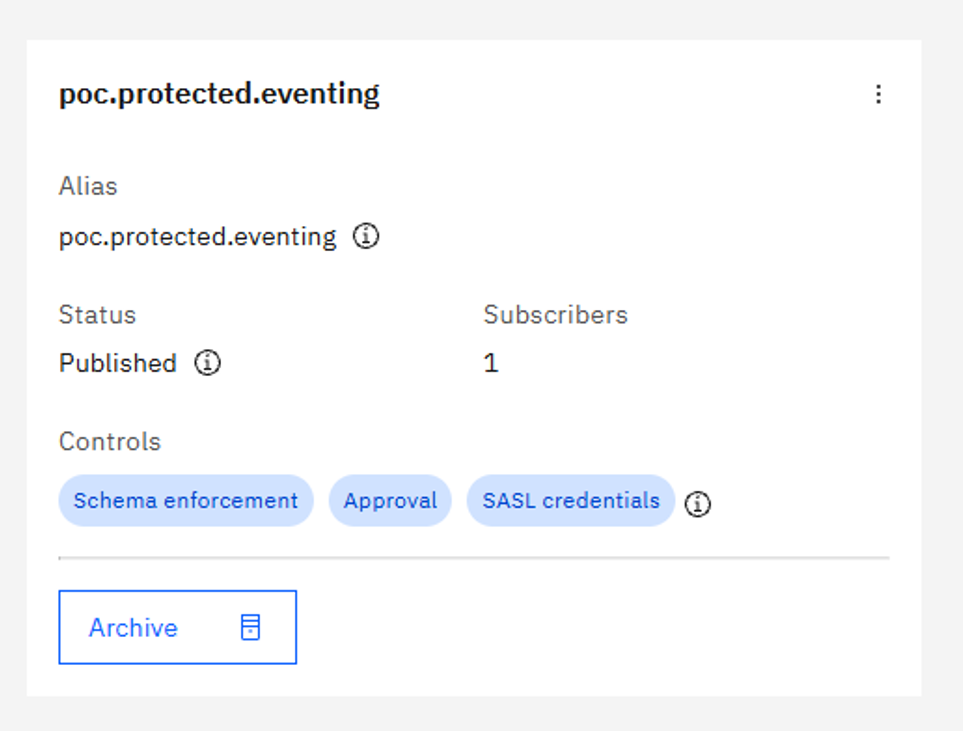
For the third use case, I’ve installed anIBM Event Endpoint Management (EEM) with an Event Gateway on OCP. In EEM I’veconfigured my local confluent as a cluster so I can expose my confluent topicsin my portal and add security and validation options. Options configured:
- Schema validation
- SASL credentials
In my demo I’ll be showcasing 3 use cases:
Case 1:
A valid and invalid message produced directlyto the Kafka topic proving I can send anything I like to the Kafka topic. Kafkawon’t do any validation for me.
Case 2:
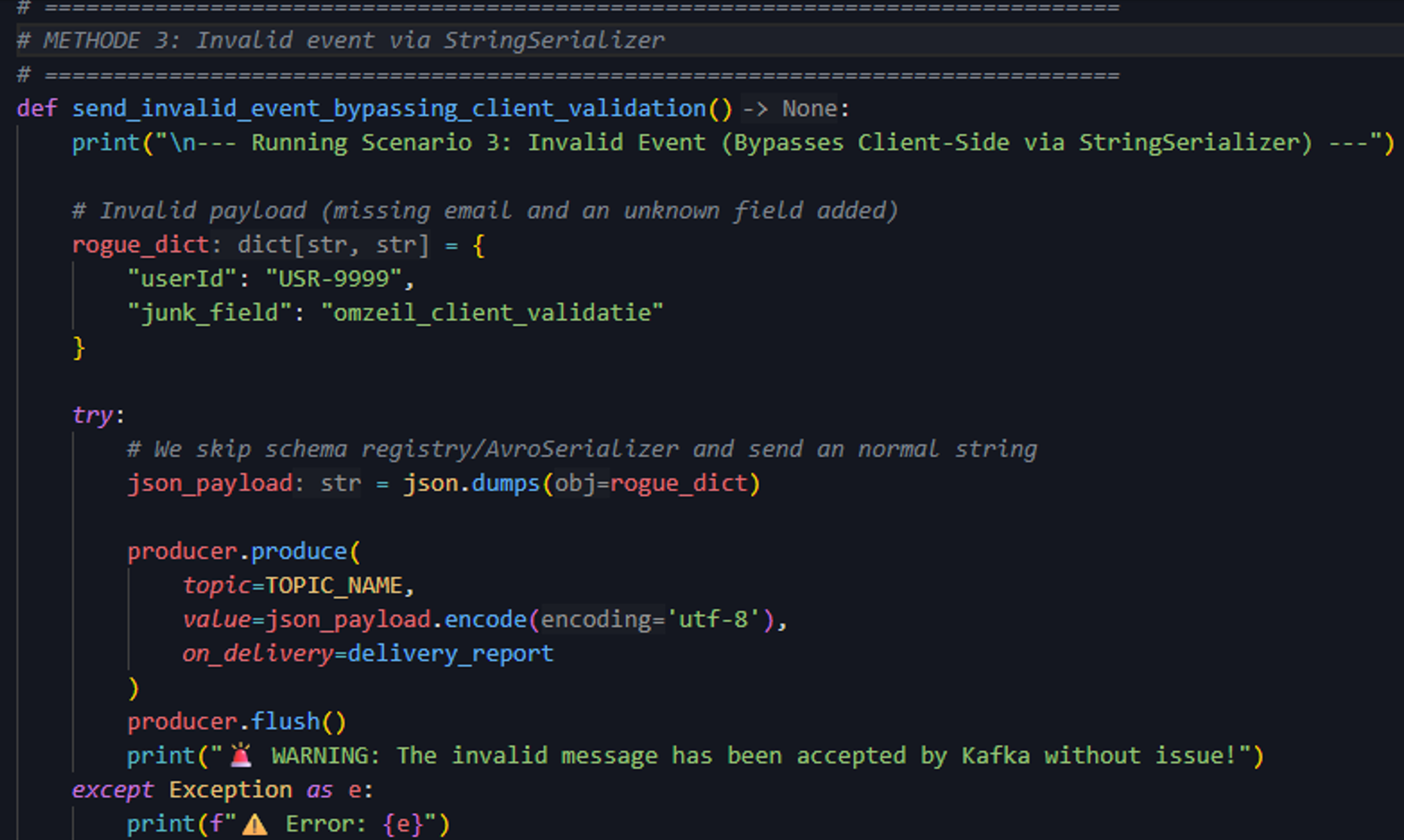
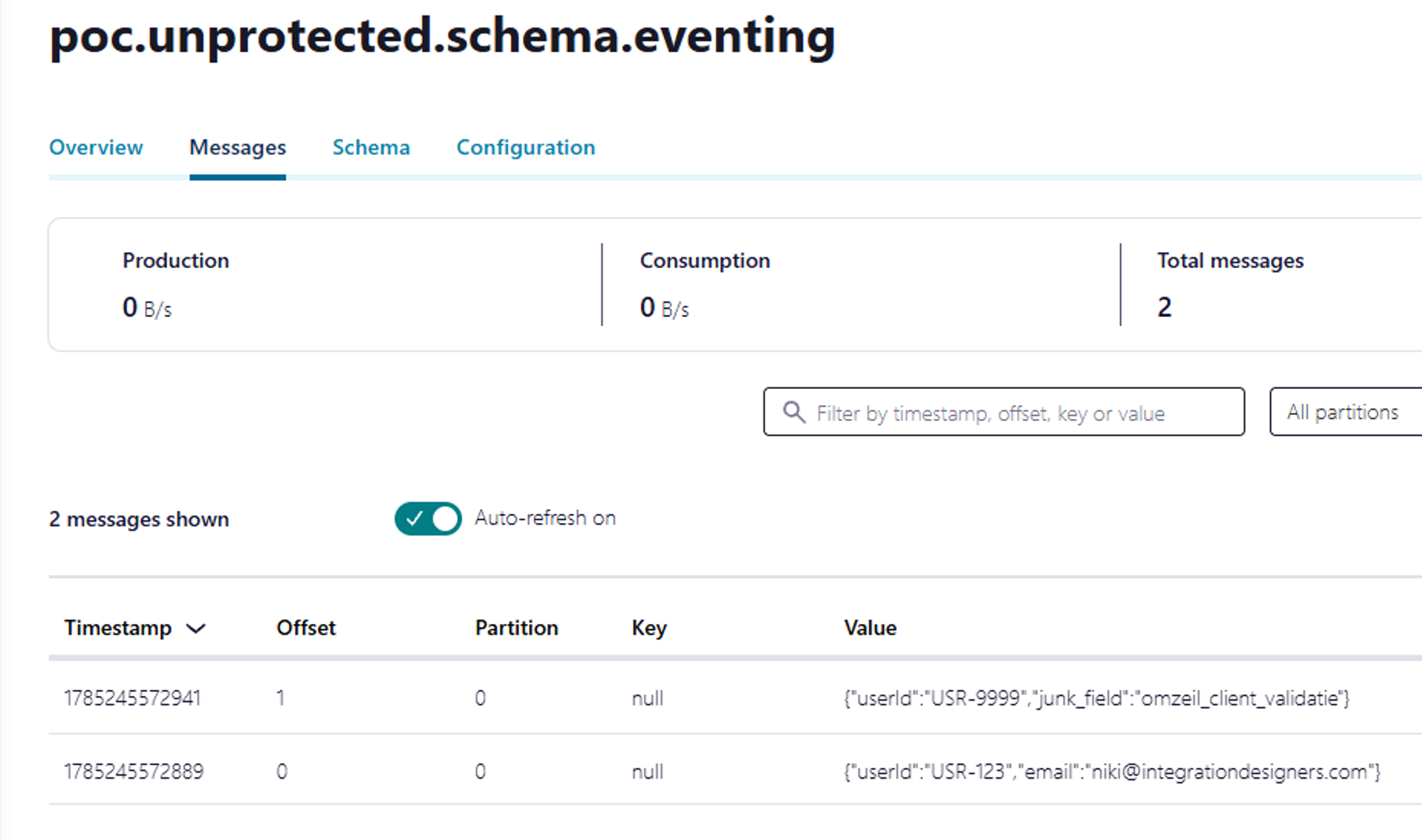
Even though we have registered a schema,using the StringSerializer, we can still send events to the topic. Using theAvroSerializer, this would have been blocked on client-side.
Risk: Consumers believe it to be safe, butwe are still depending on the producer to send valid events.
Case 3:
We put EEM in between and let EEM do eventvalidation using the same schema. Result: Consumers don’t have to rely on the producersproviding correct data. The consumers will be protected by the gateway.
CASE 1: Create a topic on Confluent and produce directlyto it (No validation)
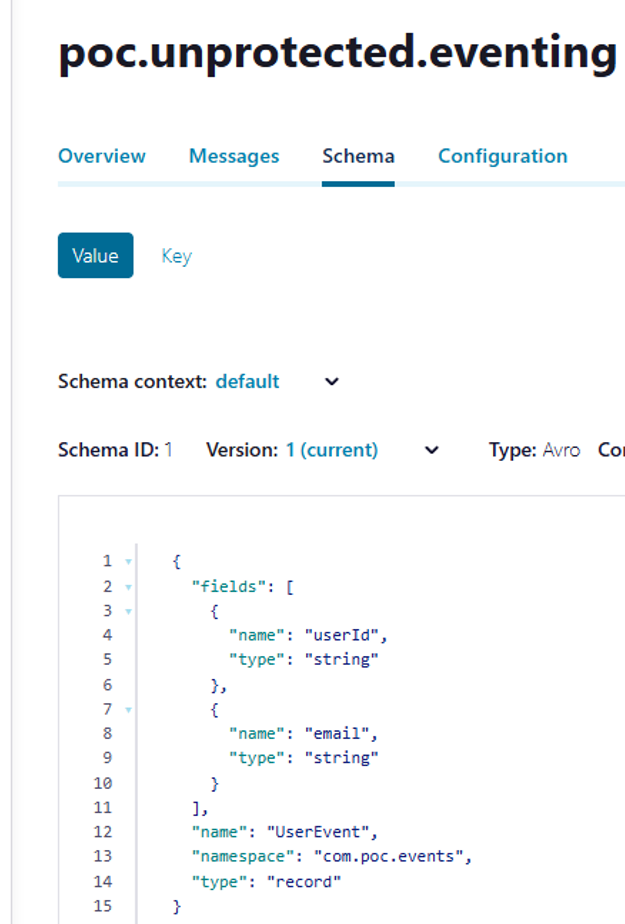
As you will see in the next screenshot. I’mable to send any event I like, even if it is not compliant the schema. Although it seems (as shown in the image)that the schema is linked to the topic. Kafka does not enforce any validation.
Schema:
Command line sending events

Results shown in confluent
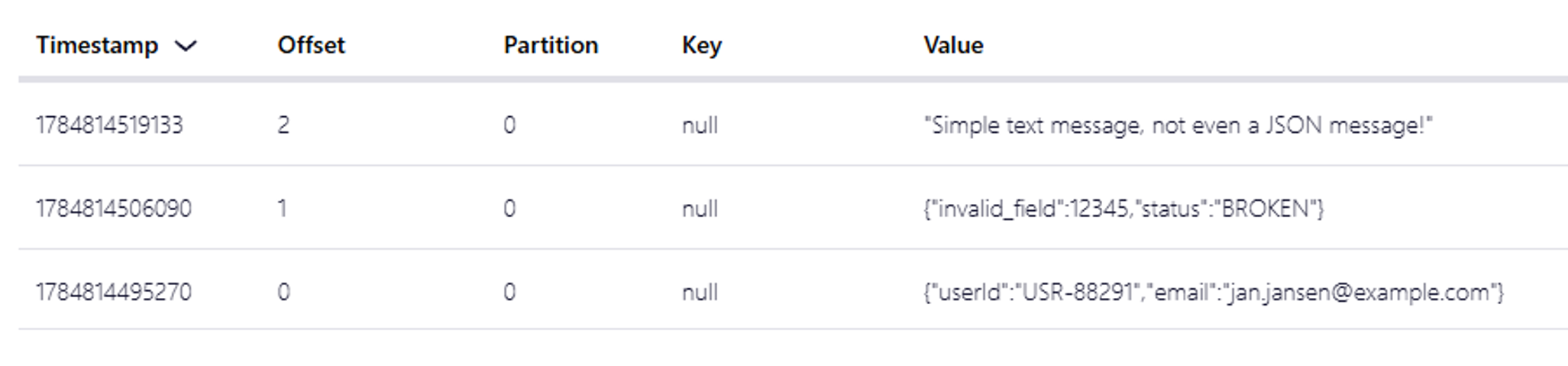
Conclusion
This shows how much the consumer relies onthe producer to provide high-quality data.
CASE 2: Create a producer with a StringSerializer
I’ll be sending data using theAvroSerializer and the StringSerializer to show how different the clientreacts.
2.1: Send a valid event
Just to prove I can send valid events
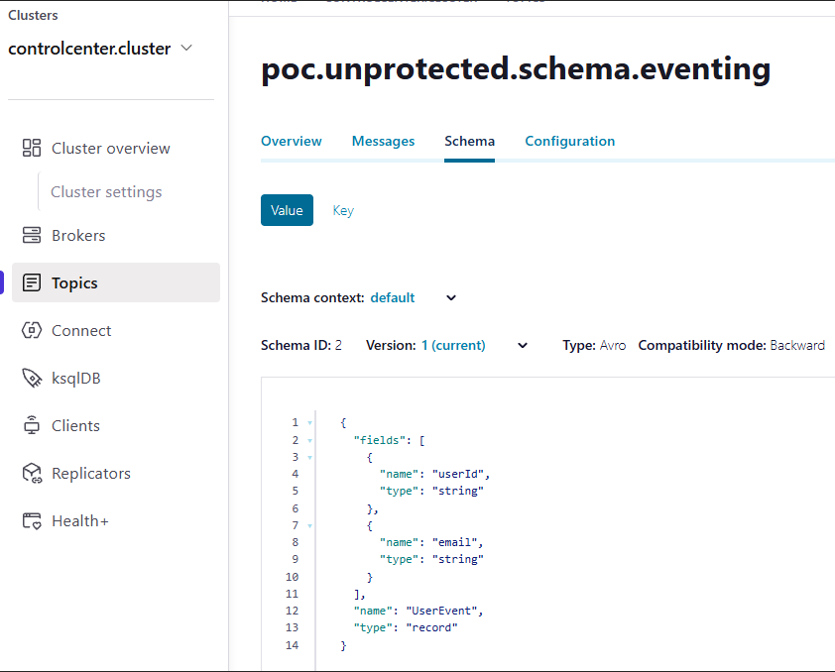
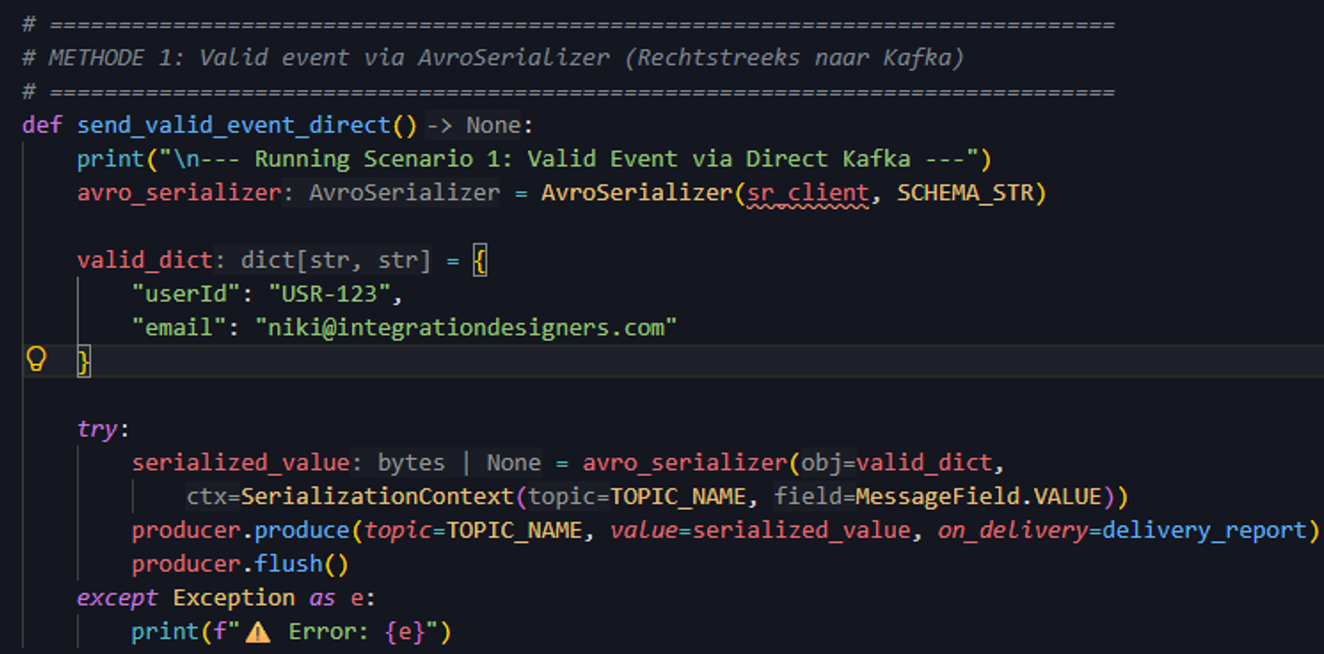

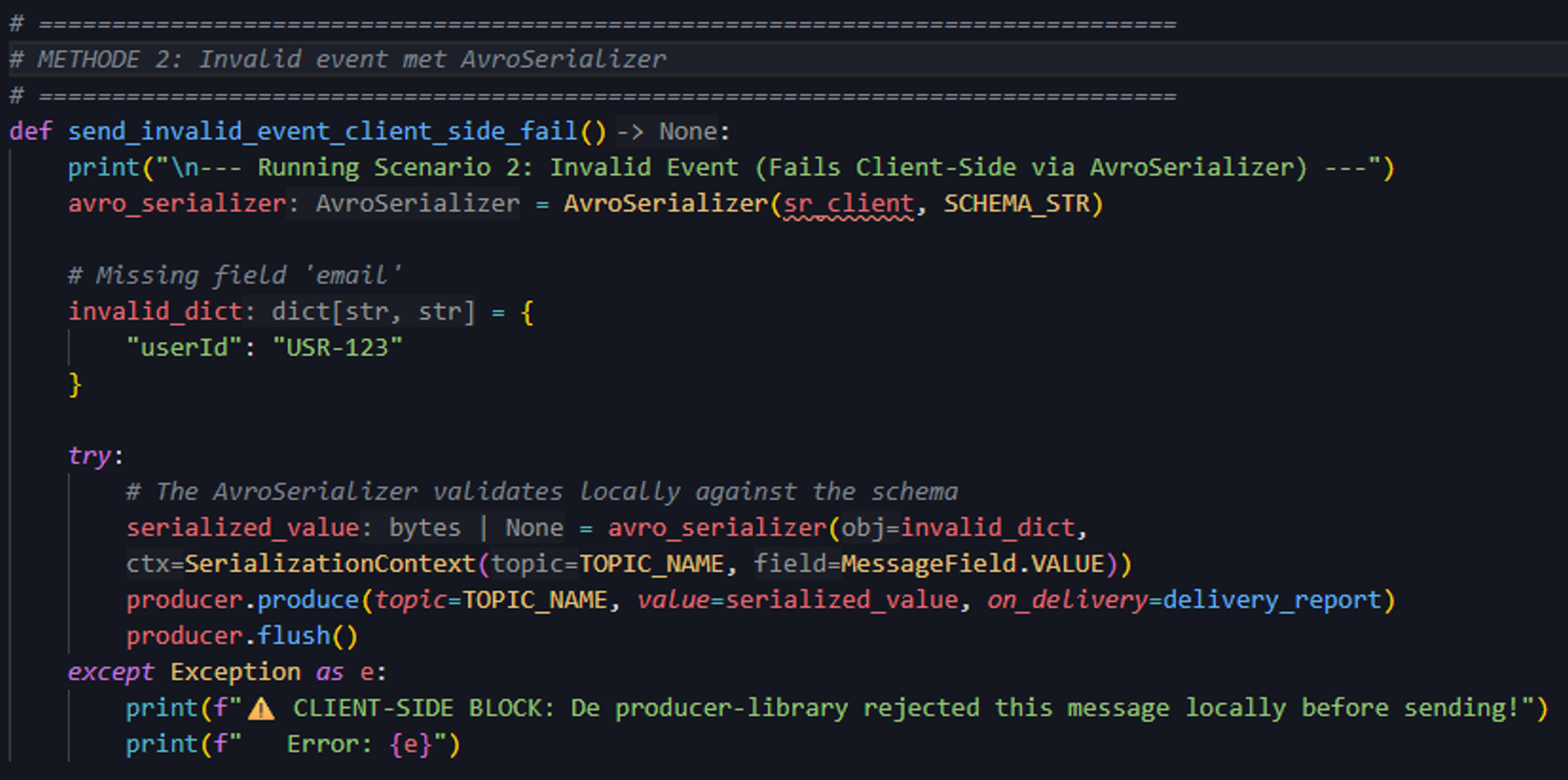
2.1 Client sideAvroSerializer
Show that when using the Schema Registryand the AvroSerializer, on client side we will be blocked from sending invalidevents
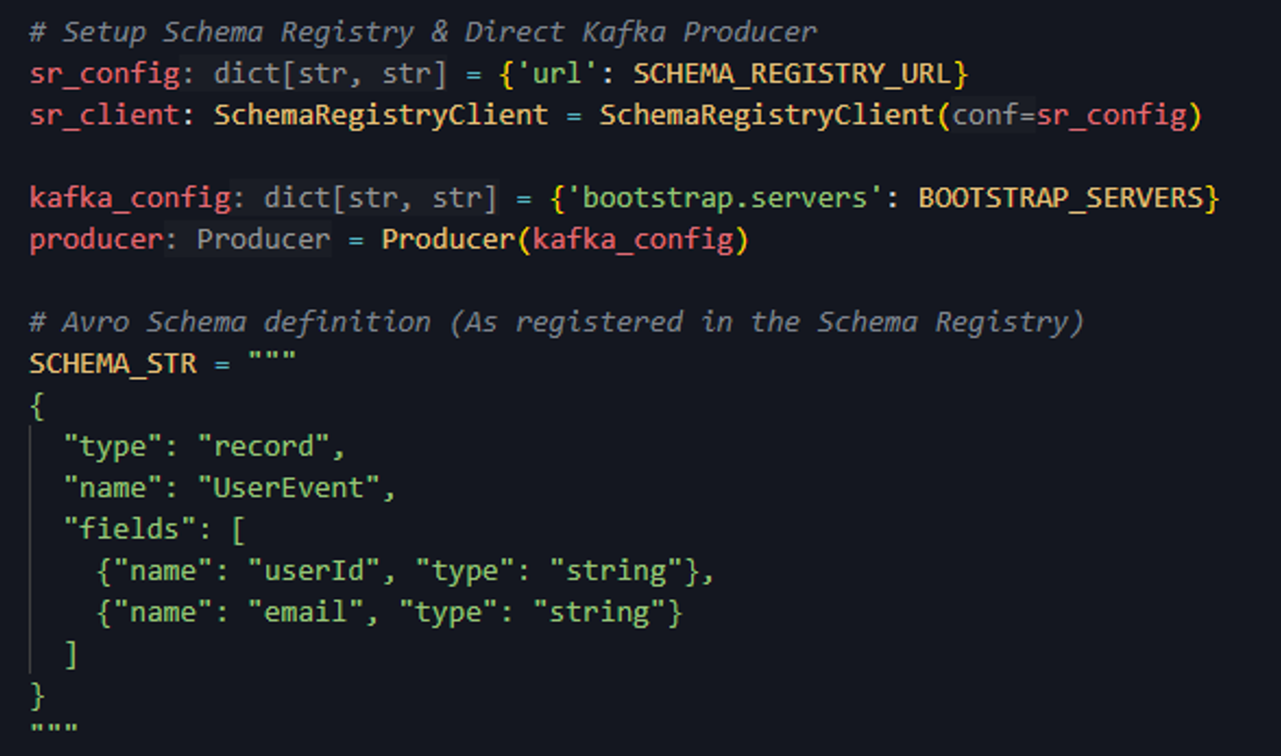

2.3: Client sideStringSerializer

CASE 3: Create a topic in EEM and add schema enforcement
In this case, we won’t be going directly tothe Kafka topic in Confluent, but we will be addressing the topic through anevent gateway. This gateway will implement schema validation for us.
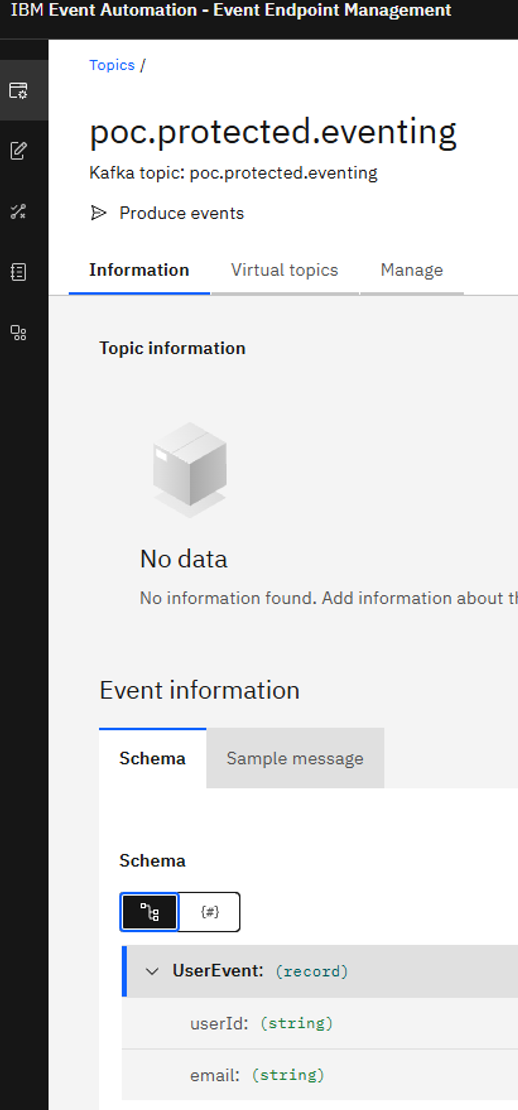
Topic and schema validation configured inEEM:
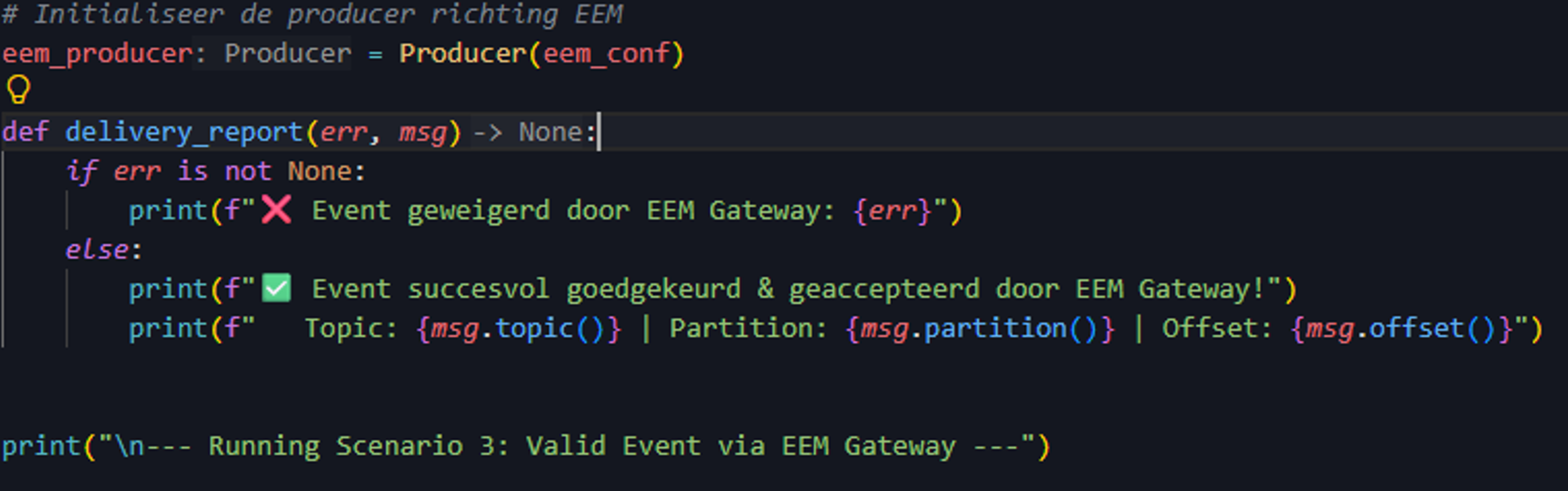
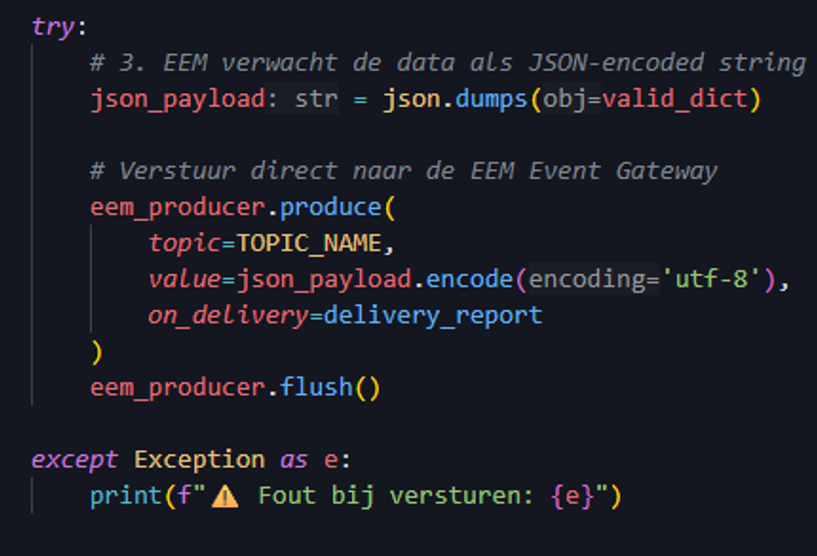
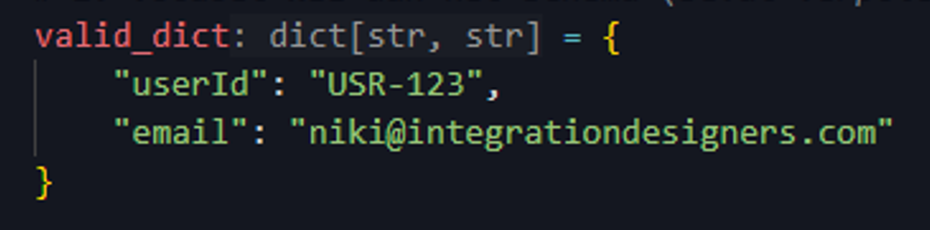
First we will be sending a valid event,next an invalid event
Valid

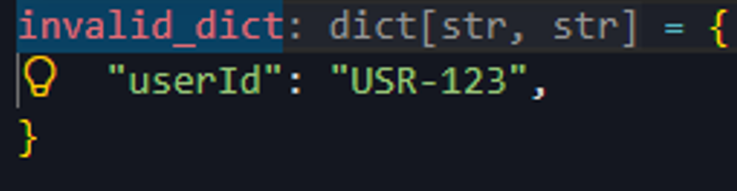
Invalid

Conclusion
Client-side validation certainly has itsadvantages as it promotes the fail-fast principle and gives developers earlyand actionable feedback during development. But as the experiments shown aboveprove, client-side validation is optional. A producer can accidentally orintentionally bypass the Schema validation and start polluting the Kafka topicwith rogue events. Even if 99% of your producers are strictly following thevalidation rules, one non-compliant event is enough to break downstreamconsumer applications and break trust in your event broker.
By introducing an Event Gateway using EEM,you shift the responsibility of data validation from an “untrusted” client to atrusted integration layer. With broker-side schema validation we are certainthat rogue events are blocked in the gateway and will never reach your Kafkatopic.
